Posts

Showing posts with the label badges

Valencia CF badge

Image
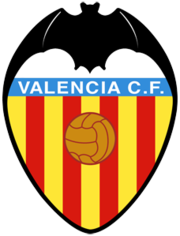
I have often wondered why the bat appears on the top of the Valencia badge and after we added the badge to the collection I thought that I had better find out. The badge is based on the coat of Arms of Valencia: The coat of arms of the city is in fact the coat of arms of James I of Aragon who conquered the Balearics and Valencia in the first part of the thirteenth century. But why did he have a bat in his coat of arms? Nobody really knows why, it could be that bats were and are simply common in the area, and this sounds like the most likely explanation. Less likely theories include that a bat landed on his flag when he was entering Valencia to take it back from the Moors in 1238 and he added it to his coat of arms then.

Crystal Palace crest history

Image
The badge above is the current crest of Crystal Palace. They are currently having a vote on a new badge at Selhurst Park, an idea which always seems to be ripe for being hijacked by rival fans to me. Therefore not surprisingly they are playing it safe with all four of the variants being Eagles, the nickname that has become synonymous with the club. It hasn't always been this way though, as they were known as the Glaziers up until 1973. The 1935-36 season was the first one in which the team wore a crest of any description and this was the initials of the club at a time when they still wore claret and blue. The next badge change for Palace came in 1955 when they introduced a badge with a facade of the place that they are named after, Crystal Palace (obviously). In 1964 Crystal Palace played Real Madrid in a friendly to open their floodlights. After this they decided to wear all white for a couple of seasons and with it and for some reason changed their badge to a red and blue shield....

Arsenal badge evolution

Image
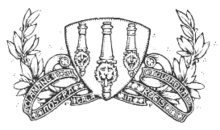
Arsenal were formed as Dial Square in 1886 and the first crest the club adopted were when they were still Woolwich Arsenal was based on the coat of arms of Woolwich, with the three 'posts' in the middle representing the cannons of the artillery based in Woolwich. It was a motif that would remain apart of the crest up until the present day. In 1922-23 Arsenal started to use a crest that was similar to today's after first introducing the single cannon as the emblem in 1922. It was a west facing cannon, which appeared to be based on the Royal Arsenal Gatehouse in Woolwich even though the Gunners had left Woolwich in 1913. The next change to the badge came in 1949 with the marksman's motto being included on the badge. This was the badge that Arsenal more or less stuck with until 2001 when it was tidied up a bit and then again in 2002 when they had to change it due to copyright problems. The only one occasion when Arsenal used a different badge was the 'Art Deco' bad...

Fenerbahce emblem

Image
Fenerbahce's name comes from Fener , which is Turkish for lighthouse and Bahce , which is Persian for garden. However neither a lighthouse or a garden appear on the badge. Nevertheless the badge does have a lot of symbolism. The badge was designed by Fener left winger Topuz Hikmet who was helped by Tevfik Haccar (who was based in London or Germany depending on which reference you read)and every little bit of it has some meaning. The white symbolises purity, the red love and attachment and the red and white are also there to invoke the Turkish flag. The yellow and blue as well as being the colours of the club represent admiration and envy, and nobility, while the acorn leaf represents the power of Fenerbahce, so that's you told! Not surprising after all that effort the only major change has been the lettering on the badge which changed when the preffered alphabet of Turkey changed.

Eastbourne Borough badge

Image
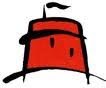
Tomorrow Cambridge United take on Eastbourne Borough and the early season form has been a bit contrary to how most people expected it to be. Cambridge are at the moment, although it's still early days near the bottom of the Conference and Eastbourne who were expected to struggle have got off to a good start. Eastbourne were formed as late as 1964, so it's probably good to look at their badge rather than their rather short history. The Eastbourne Borough badge might look like a sandcastle but it actually represents a Martello Tower. The Martello Towers are fortifications that were built along the South Coast to repel Napoleon in the 19th Century. Eatbourne Borough were formed as Langney FC in 1964 and changed their name to Langney Sports four years later. The Martello tower in the badge is the one situated at Langney Point. The club didn't have a badge until the 1970s and the Martello Tower was chosen ahead of The Priory, mainly because it was easier to draw. The three waves...

Eastern Counties League Part 3 badges

Image
Part 3 to go with the focus on teams in the Eastern Counties Premier League 2010-2011 Mildenhall Town Newmarket Town Norwich United Stanway Rovers Walsham-le-Willows

Eastern Counties League 2010-2011 badges

Image
Here are the badges for the teams featured in the second part of the review of clubs in the Eastern Counties Premier League for this season. Great Yarmouth Town Hadleigh United Haverhill Rovers Histon Reserves Kirkley and Pakefield Leiston

Eastern Counties League 2010 -2011 Part 1 badges

Image
Brantham Athletic CRC CRC are a feeder club for Cambridge United and use the same badge Debenham LC Dereham Town Ely City Felixstowe and Walton United FC Clacton

Badges of distinction -- Cheltenham Town

Image
Fair play to Cheltenham Town for their new badge, as an Ely City regular I have taken a weird interest in teams nicknamed the Robins in the past and lamented the fact that teams like Bristol City and Charlton Athletic have lost the Robins from their badges over the years. It's quite a brave design and as Guy Douglas from the designers flb says it was the most contemporary design that they put forward. I have to say that I really like it and I also like the fact that it has the unusual format of a Robin in flight. I stumbled upon the image on the design football website, so apologies to them for ripping it off, but as I said I really like this design.

Ipswich Town badge

Image
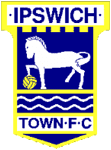
It doesn't seem as if there was a badge for Ipswich until John Grimmage designed the badge at the top in 1972. The badge shows the Suffolk punch, which he described as ' a noble beast'. The castle parts are the turrets of Wolsley Gate and I think that the squiggly lines represent the river that leads an estuary in Ipswich (I'll rectify that later. Below is the latest version of the badge, which is pretty much the same, although on the shirts it also appears with 3 stars to celebrate the League win in 1962, the FA Cup in 1978 and the UEFA Cup in 1982

The badge of Berwick Rangers

Image
Like TNS who we looked at previously Berwick Rangers are a border club. The border in this case being the Scottish and English one. Their original badge was just the bear and elm tree, which features on the local council's coat of arms, although the bear on that emblem appears tethered, but in the club's badge looks realtively free. Some people have suggested that the bear comes from the name of the town Berwick, however Ber probably comes from the old Norse word for Barley (baer) or headland (bar) with Wick meaning vik (bay) or wik (settlement). In the 1990s the club added the Scottish rampant lion and the English lion. Berwick are the only Scottish team to play in England a fact that doesn't always make them popular with visitig supporters, although when I visited there they were one of the friendliest clubs out. Berwick has always had a confused history over its nationality having changed hands between Scotland and Enlgand 13 times, and once Queen Victoria named it as a ...

The New Saints

Image
TNS were formed from a merger between Welsh club Llansatffraid and Oswestry Town in 2003, both clubs have separate teams operating independently at much lower levels than the Welsh Premier League that TNS is frequently near or at the top of. TNS originally stood for Total Network Solutions, but when they were taken over in 2006 by British Telecom the sponsorship came to an end. They finally settled on the name of The New Saints, as it allowed them to keep their initials, but also as Llansatffraid's nickname was the Saints and St.Oswald has strong roots with Oswestry: or at least they say, it seems that Llansatffraid have always had the upper hand in this relationship. It should also be noted that the club wear the green and white of Llansatffraid, although they play across the border in Oswestry. This is not surprising though, as it was the chance of European football that the original Llansatffraid offered that led to the sponsorship deal, and Oswestry, an English club in the Wels...

Newmarket Town's badge

Image
It's notoriously hard to find out any information about badges of clubs at this level, so there is a lot of guess work going on here. Firstly, the most obvious part of the badge is the horse with the jockey on it. Newmarket is the centre of British horse racing and has been since the days of James I. The rampant lion above the horse and jockey could possibly be from King James' Coat of Arms, as he was also the King of Scotland, as well as being an avid horse racer, who saw that Newmarket was the perfect place for horse racing also became famous for sponsoring the bible in 1611. However the coat of arms of James is the same one that appears on British Passports, so the lion is facing the wrong way. The lion could therefore be from King Charles II who was also King of Scotland and incorporated the rampant lion in his coat of arms facing the same way as on the badge of Newmarket. King Charles II really put Newmarket on the map. He was such an avid horse racer that he would often m...

The badge of Boldmere St.Michael's

Image
Boldmere St.Michael's come from Sutton Coldfield and their badge shows that they are very proud of the fact. The club started off in 1883 as a junior team that combined football with bible classes. At the moment they play in the Midlands Football Alliance, which is step 5 on the pyramid. If we look at the badge and go from left to right and top to bottom we can see the following: In the top left corner is the tudor rose and this illustrates that King Henry VIII made Sutton Coldfield a royal town in 1528. The bear and staff signifies the Earls of Warwick, as Sutton was in Warwickshire before counties were messed with in the 1970s (and beyond). The deer on the bottom left also signify the influence of Henry VIII in 1528, as apart from granting a royal charter to the town he also gave the deer park, which is now Sutton Park to the town. The sword in the bottom right corner is a bit more of an enigma, but it's believed that it's there to signify that in the eigteenth century ar...

U.C. sampdoria's crest

Image
Unione Calcio Sampdoria's crest might look like some weird shaped island, but the picture is actually the outline of a sailor, as I found out when I was leafing through some football books in Rome a few years back. The sailor's name is Baciccia, which can strangely be translated into John the Baptist in English or Giovanni Baptista in Italian. The blue comes from Andrea Doria and the white, red and black from Sampierdese. The 2 clubs formed on 12th August 1846 to form Sampdoria

Anderlecht and the pilgrim

Image
The crest of Anderlecht is purple and white because they are the colours of the club. The SCA stands for Sports Club Anderlecht and the crown was added in 1933, when the club officially became Royal Sporting Club Anderlechtois. The motto of the club is 'Mens sana in corpore sana', which can perhaps be translated as 'healthy mind and healthy body'. The lad at the bottom of the badge is St. Guy or St.Guido of Anderlecht, who is the patron saint of the area. He was a businessman, who turned into a pilgrim after crashing his boat, and thinking it was punishment for being greedy he decided to go to Rome and then Jerusalem. He died on his way back from Jerusalem and many years later his grave was discovered by a work horse. Apart from being the patron saint of Anderlecht he's also the saint of workhorses, horned animals, epileptics, stables and protects people from rabies